


Research Use Only · RUO
Size
Quantity
Bundle & Save
Ships in 2–5 business days · Free shipping on orders over $150
What is NAD+?
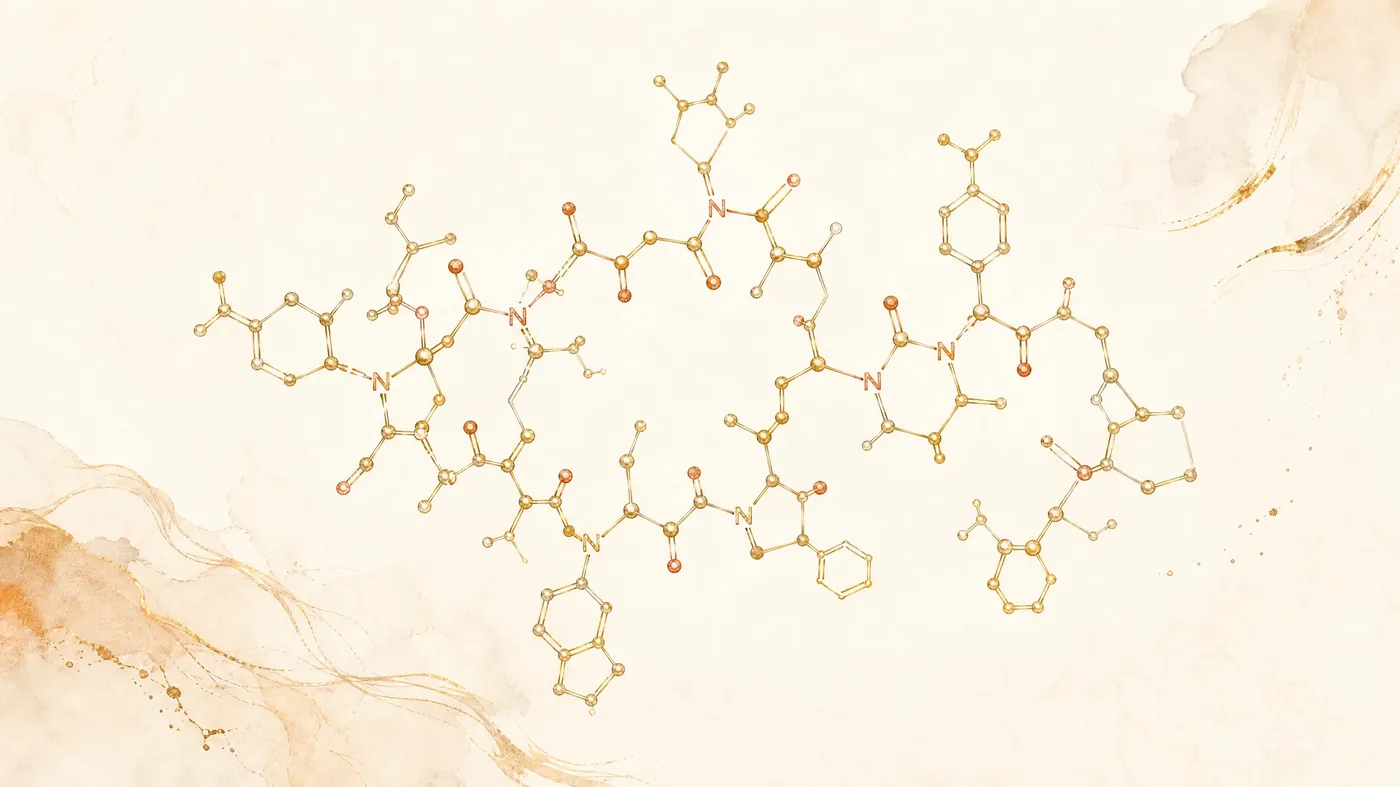
NAD+ (nicotinamide adenine dinucleotide) is offered by HAUZ Research as an NAD+ research compound for laboratory use, supplied in 500 mg and 1000 mg vials. NAD+ is a dinucleotide made of two nucleotides joined through their phosphate groups: one carries an adenine base and the other carries nicotinamide. Its CAS number is 53-84-9, its molecular formula is C21H27N7O14P2, and its molecular weight is 663.43 g/mol.
NAD+ is found in all living cells. In biochemistry it is studied as a coenzyme that accepts and donates electrons in oxidation-reduction reactions, cycling between its oxidized form (NAD+) and reduced form (NADH). It is also used as a substrate by several enzyme families, including sirtuins, poly(ADP-ribose) polymerases (PARPs), and CD38. For background reading, see our NAD+ research guide.
Origins and structure
NAD+ was first identified in 1906 by Arthur Harden and William John Young, who described a heat-stable “coferment” needed for fermentation in yeast extracts. In 1936, Otto Warburg showed that the nicotinamide portion of the molecule is the site where electrons are transferred. Later work in the 1940s and 1950s, including studies by Arthur Kornberg and by Jack Preiss and Philip Handler, mapped the enzymes cells use to build NAD+.
Areas of laboratory research
- Enzyme and pathway biochemistry: A review by Verdin, 2015 described NAD+ as both an electron carrier in redox reactions and a co-substrate for sirtuins and PARPs, and summarized laboratory studies reporting that cellular NAD+ concentrations change with age in model organisms.
- Cellular processes: A review by Covarrubias et al., 2021 examined how NAD+ is made, used, and broken down in cells, and how NAD+ metabolism relates to processes such as DNA repair and immune-cell function in experimental models.
- Animal-model studies: A review by Rajman et al., 2018 compiled in vivo studies, mostly in rodents, that examined molecules used to raise NAD+ levels and the tissues and measurements those studies looked at.
For a broader look at current publications, read our article on NAD+ research published in 2026.
Quality and verification
Every HAUZ Research lot of NAD+ is independently tested for HPLC purity (99% or higher), identity by mass spectrometry, and endotoxin. The certificate of analysis for each lot is published in the COA Library, so researchers can match the lot number on their vial to its test results. NAD+ is supplied as a lyophilized (freeze-dried) powder and is sold strictly for research use only.
Frequently asked questions
What is NAD+ studied for in research?
Published laboratory work has examined NAD+ as a coenzyme in redox reactions, as a substrate for enzymes such as sirtuins, PARPs, and CD38, and in cell-culture and animal-model studies of how NAD+ levels are produced and consumed.
What is the CAS number of NAD+?
The CAS number of NAD+ (nicotinamide adenine dinucleotide) is 53-84-9. Its molecular formula is C21H27N7O14P2 and its molecular weight is 663.43 g/mol.
Is NAD+ approved for human use?
No. HAUZ Research sells NAD+ for laboratory research use only. It is not intended for human or veterinary use, is not a food or dietary supplement, and is not an FDA-approved drug in this form.
Published Research Summary
NAD+ (nicotinamide adenine dinucleotide) is a coenzyme present in all cells and is studied for its role in oxidation-reduction reactions and as a substrate for sirtuins and PARPs. Verdin (2015) reviewed NAD+ biochemistry and laboratory reports of age-related changes in cellular NAD+ levels in model organisms (PMID 26785480). Covarrubias et al. (2021) reviewed NAD+ synthesis, consumption, and links to DNA repair and immune-cell function in experimental models (PMID 33353981). Rajman et al. (2018) compiled in vivo animal studies of molecules that raise NAD+ levels (PMID 29514064).
All citations reference published literature. Not a claim of efficacy.
Store at -20°C in a dry, dark environment. Stable for 24 months. Highly hygroscopic — minimize exposure to moisture upon opening.