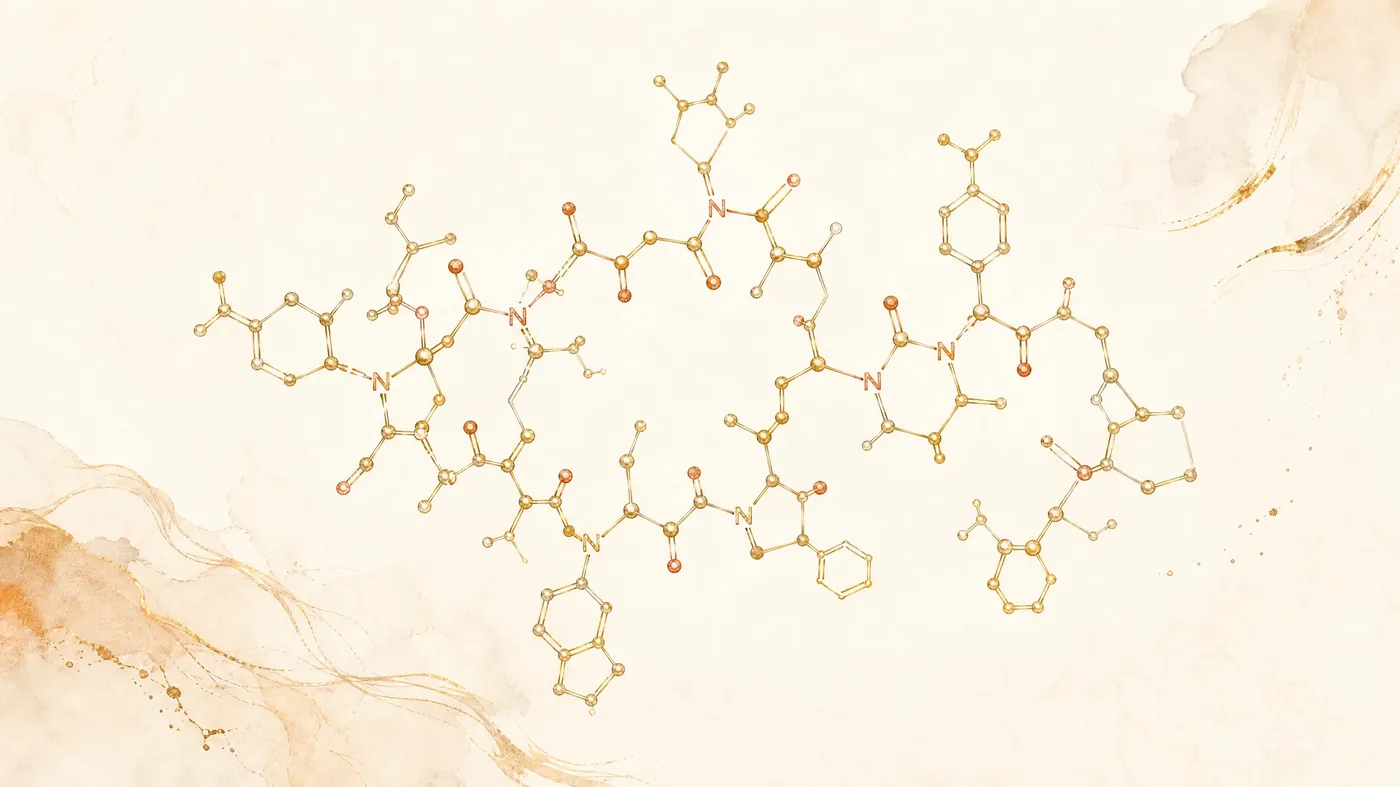

AOD-9604 (Anti-Obesity Drug 9604) is a synthetic peptide corresponding to amino acids 176-191 of human growth hormone (hGH), with a tyrosine residue added at the N-terminus to facilitate radioiodination for research studies. Its full sequence is Tyr-Leu-Arg-Ile-Val-Gln-Cys-Arg-Ser-Val-Glu-Gly-Ser-Cys-Gly-Phe, with a disulfide bond between the two cysteine residues. AOD-9604 is registered under CAS number 221231-10-3 and has a molecular weight of approximately 1817 Da.
The development of AOD-9604 was motivated by the observation that full-length hGH has lipolytic (fat-mobilizing) activity in addition to its growth-promoting and insulin-sensitizing effects. Research by Ng et al. at Monash University in the 1990s identified the C-terminal region of hGH as the domain responsible for its lipolytic activity, while the N-terminal region was associated with growth-promoting and diabetogenic effects. AOD-9604 was designed to isolate the lipolytic activity of hGH in a smaller, more tractable peptide fragment.
Preclinical research in rodent models of obesity documented that AOD-9604 treatment reduced body fat accumulation and stimulated lipolysis without the growth-promoting or insulin-sensitizing effects of full-length hGH. Studies examined effects on adipocyte differentiation, lipid metabolism enzyme activity, and body composition in diet-induced obesity models. These findings generated significant interest in AOD-9604 as a potential research tool for studying fat metabolism pathways.
The mechanism by which AOD-9604 exerts its lipolytic effects is not fully characterized. Unlike full-length hGH, AOD-9604 does not appear to bind the classical hGH receptor. Research has suggested involvement of a beta-3 adrenergic receptor-dependent pathway, though this remains an area of active investigation. The dissociation of lipolytic from growth-promoting activity in AOD-9604 makes it a useful research tool for studying these pathways independently.
For in vitro research, AOD-9604 is used in studies of adipocyte biology, lipid metabolism, and fat cell differentiation. Common applications include lipolysis assays measuring glycerol release from adipocytes, studies of lipase enzyme activity, and differentiation assays in 3T3-L1 or primary adipocyte cultures.