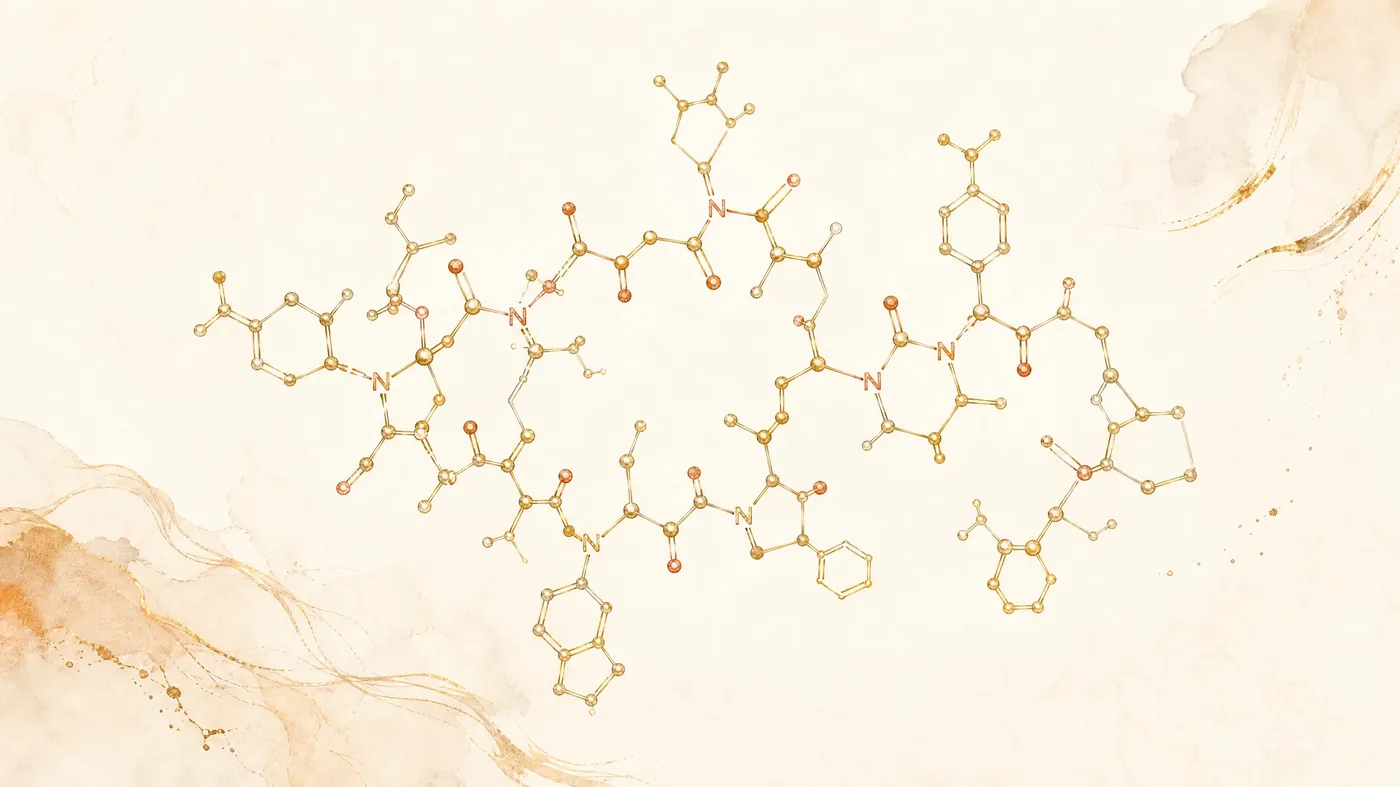

Selank is a synthetic heptapeptide with the sequence Thr-Lys-Pro-Arg-Pro-Gly-Pro. It is derived from tuftsin (Thr-Lys-Pro-Arg), a naturally occurring tetrapeptide fragment of immunoglobulin G that was identified as an immunomodulatory agent in the 1970s. The Pro-Gly-Pro C-terminal extension was added to increase metabolic stability. Selank is registered under CAS number 129954-34-3 and has a molecular formula of C₃₃H₅₇N₉O₉ with a molecular weight of 751.86 g/mol.
Tuftsin, the parent sequence of Selank, was identified as a fragment of the Fc region of IgG that stimulates phagocytic activity of macrophages and neutrophils. Selank retains some of tuftsin's immunomodulatory properties while exhibiting additional neurological effects that are not characteristic of the parent compound. This expanded pharmacological profile is attributed to the Pro-Gly-Pro extension and the resulting changes in the peptide's conformation and receptor interactions.
The most extensively studied property of Selank in preclinical research is its anxiolytic effect. Studies in rodent models using elevated plus maze, open field, and other anxiety paradigms have documented anxiolytic effects of Selank treatment. Research has examined the relationship between Selank's anxiolytic effects and the GABAergic system, with some studies suggesting modulation of GABA-A receptor function. Unlike classical benzodiazepine anxiolytics, Selank does not appear to produce sedation or muscle relaxation in animal models.
Nootropic research has examined Selank's effects on learning, memory, and cognitive performance in animal models. Studies have documented improved performance in learning paradigms and memory tests in Selank-treated animals. Research has also examined effects on neurotrophic factor expression, with some studies reporting increased BDNF levels following Selank treatment — a mechanism shared with Semax.
Immunomodulatory research has examined Selank's effects on cytokine production and immune cell function. Studies have documented effects on IL-6, TNF-α, and interferon production in stimulated immune cells, as well as effects on natural killer cell activity. These immunological effects reflect the tuftsin heritage of the compound.