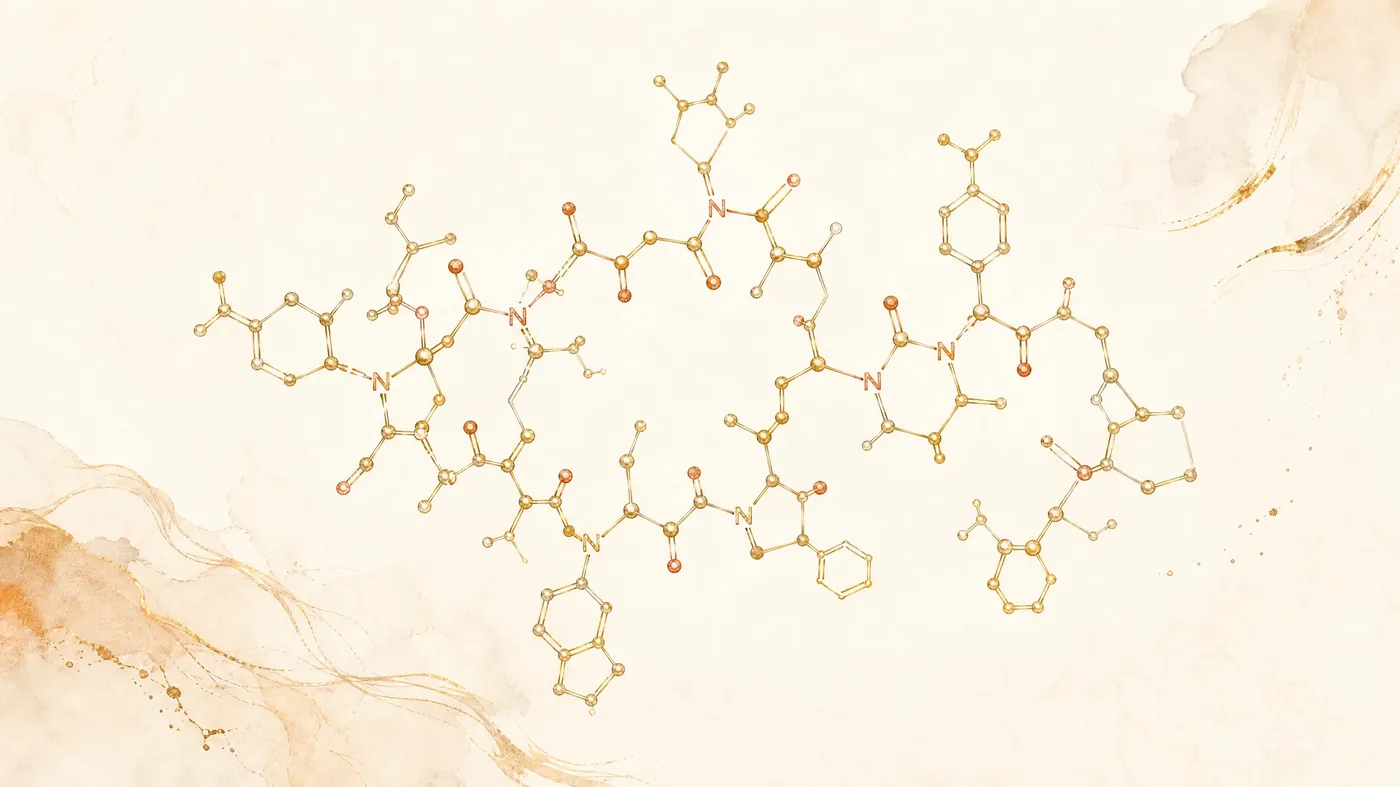

TB-500 is the name most often used for a synthetic version of Thymosin Beta-4 (Tβ4), a 43-amino-acid actin-sequestering protein encoded by the TMSB4X gene. Thymosin beta-4 is registered under CAS number 77591-33-4 and has a molecular weight of about 4,963 g/mol. Some suppliers use the name TB-500 for a short fragment containing the protein’s actin-binding region (amino acids 17–23, LKKTETQ) instead, so a COA should state clearly which molecule is in the vial.
Thymosin Beta-4, the parent protein from which TB-500 is derived, is one of the most abundant intracellular proteins in mammalian cells. It was first isolated from thymic tissue in the 1960s and was initially studied for its role in immune system development. Subsequent research revealed that Tβ4 is expressed in virtually all nucleated cells and plays a fundamental role in actin dynamics — specifically, it sequesters G-actin (globular actin) monomers, regulating the pool of actin available for polymerization into F-actin (filamentous actin). This actin-regulatory function underlies many of Tβ4's downstream effects on cell motility and tissue remodeling.
The 17–23 region of Tβ4 contains the protein’s main actin-binding motif. Fragments of this region have been reported to retain some of the full protein’s activity in preclinical models, which is why both the full protein and short fragments appear in the literature.
The most extensively studied property of TB-500 in preclinical research is its role in promoting cell migration. In vitro studies have demonstrated that TB-500 promotes the migration of keratinocytes, endothelial cells, and cardiac stem cells in scratch assay models. This pro-migratory effect is thought to be mediated through the actin-binding domain's interaction with the cytoskeletal machinery that drives lamellipodia formation and directional cell movement. Research published in the Annals of the New York Academy of Sciences has documented these effects across multiple cell types.
Angiogenesis — the formation of new blood vessels — represents a second major area of TB-500 preclinical research. Studies have documented upregulation of angiogenic factors including VEGF (vascular endothelial growth factor) in TB-500-treated tissue, as well as direct effects on endothelial cell tube formation in Matrigel assays. Research in rodent models of ischemia has examined the potential role of Tβ4 and its fragments in promoting vascular recovery following ischemic injury.
Cardiac research has been a particularly active area of TB-500 investigation. Studies published in Nature and the Journal of Clinical Investigation have examined the role of Tβ4 in cardiac progenitor cell activation and myocardial repair following infarction in mouse models. Research groups have documented mobilization of epicardial progenitor cells and improved cardiac function metrics in treated animals. These findings have generated significant interest in the potential role of Tβ4 pathway modulation in cardiac regenerative research.
Lyophilized (freeze-dried) TB-500 is generally stored at -20°C, and repeated freeze-thaw cycles should be avoided.
COA verification for TB-500 should include HPLC purity (≥98% for research grade), mass spectrometry confirmation of the expected molecular weight (about 4,963 g/mol for full-length thymosin beta-4), endotoxin testing, and lot number traceability. The FDA's July 2026 advisory panel review of TB-500 noted a lack of completed human clinical trials (the panel still voted 8–6 to recommend it), underscoring the importance of rigorous preclinical documentation for any research involving this compound.
To check what a certificate shows, see our guide on how to read a peptide COA.