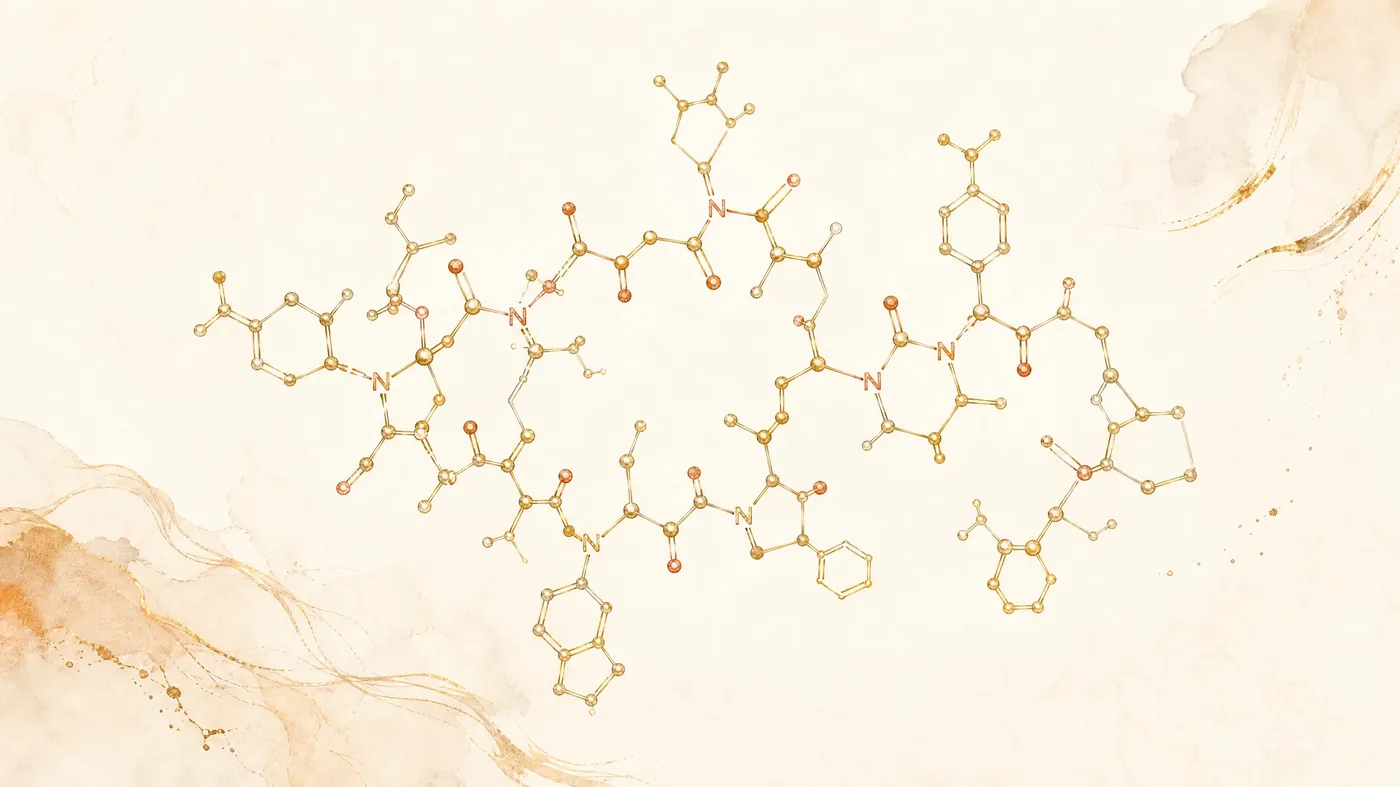

Tesamorelin (INN; brand name Egrifta) is a synthetic analogue of endogenous growth hormone-releasing hormone (GHRH), also known as growth hormone-releasing factor (GRF). It consists of the full 44-amino acid sequence of human GHRH(1-44) with a trans-3-hexenoic acid group conjugated to the N-terminal tyrosine residue. This modification increases the peptide's resistance to dipeptidyl peptidase IV (DPP-IV) cleavage, extending its half-life compared to native GHRH. Tesamorelin is registered under CAS number 218949-48-5 and has a molecular weight of approximately 5135 Da.
Growth hormone-releasing hormone is the primary hypothalamic regulator of growth hormone (GH) secretion from the anterior pituitary. GHRH binds to the GHRH receptor (GHRHR), a G-protein coupled receptor expressed on somatotroph cells, activating adenylyl cyclase and increasing intracellular cAMP. This cAMP signal drives both GH synthesis and pulsatile GH secretion. The GH secreted in response to GHRH stimulation then acts on peripheral tissues to stimulate IGF-1 production, which mediates many of GH's anabolic and metabolic effects.
Tesamorelin received FDA approval in 2010 for the reduction of excess abdominal fat in HIV-infected patients with lipodystrophy — making it the only GHRH analogue with regulatory approval for any indication. This regulatory history means that Tesamorelin has a more extensive clinical data package than most research peptides, including pharmacokinetic data, safety data from Phase 3 trials, and mechanistic data on its effects on the GH/IGF-1 axis in humans. This clinical data makes Tesamorelin a particularly well-characterized research tool for studying GHRH receptor pharmacology.
Research applications for Tesamorelin include studies of GHRH receptor signaling, GH pulsatility, and the downstream effects of GH/IGF-1 axis activation on metabolism, body composition, and tissue biology. In vitro applications include receptor binding assays using cells expressing the GHRHR, cAMP accumulation assays to characterize receptor activation, and studies of GH secretion dynamics in pituitary cell cultures.
A Tesamorelin COA should include HPLC purity, mass spectrometry confirmation of the approximately 5135 Da molecular weight, and endotoxin testing.