

Research Use Only · RUO
Size
Quantity
Bundle & Save
Ships in 2–5 business days · Free shipping on orders over $150
What is Semax?
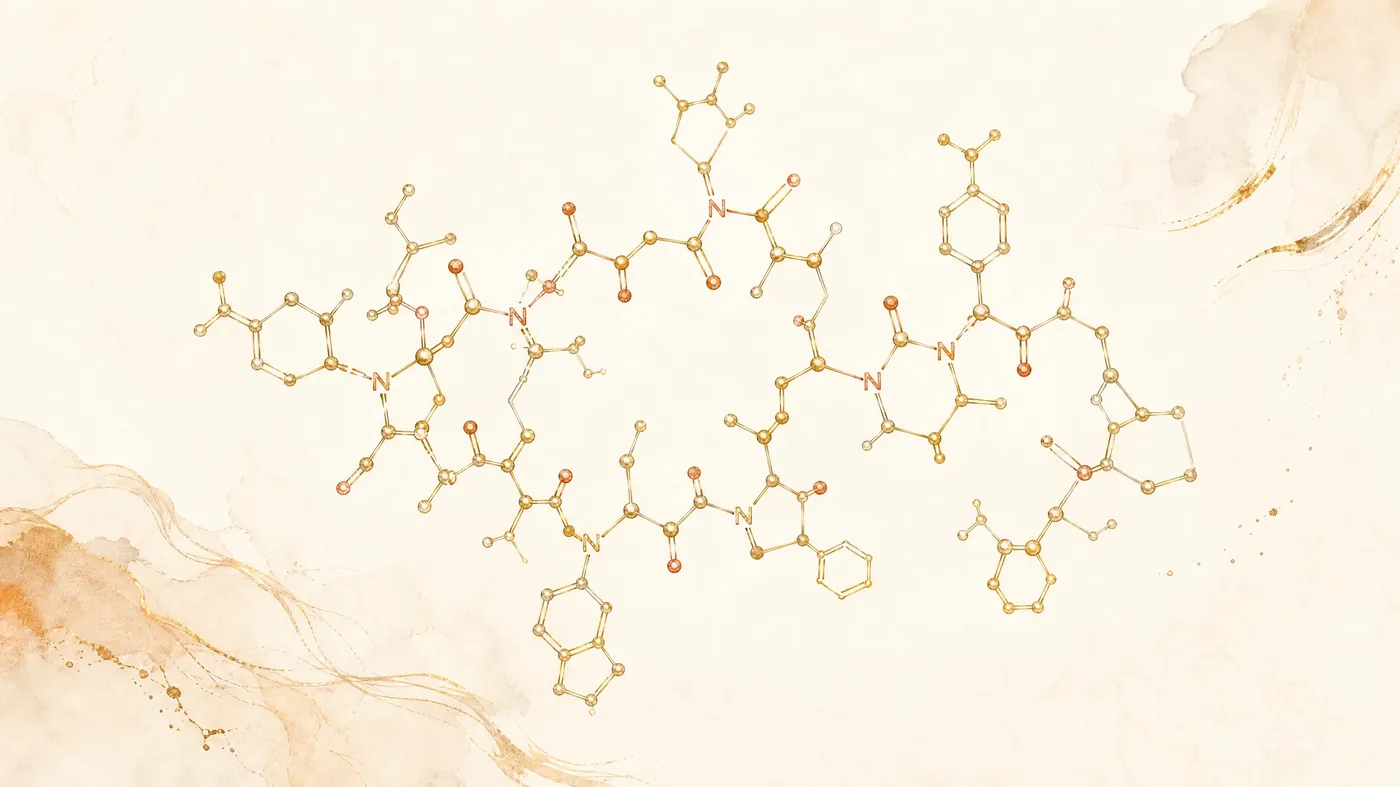
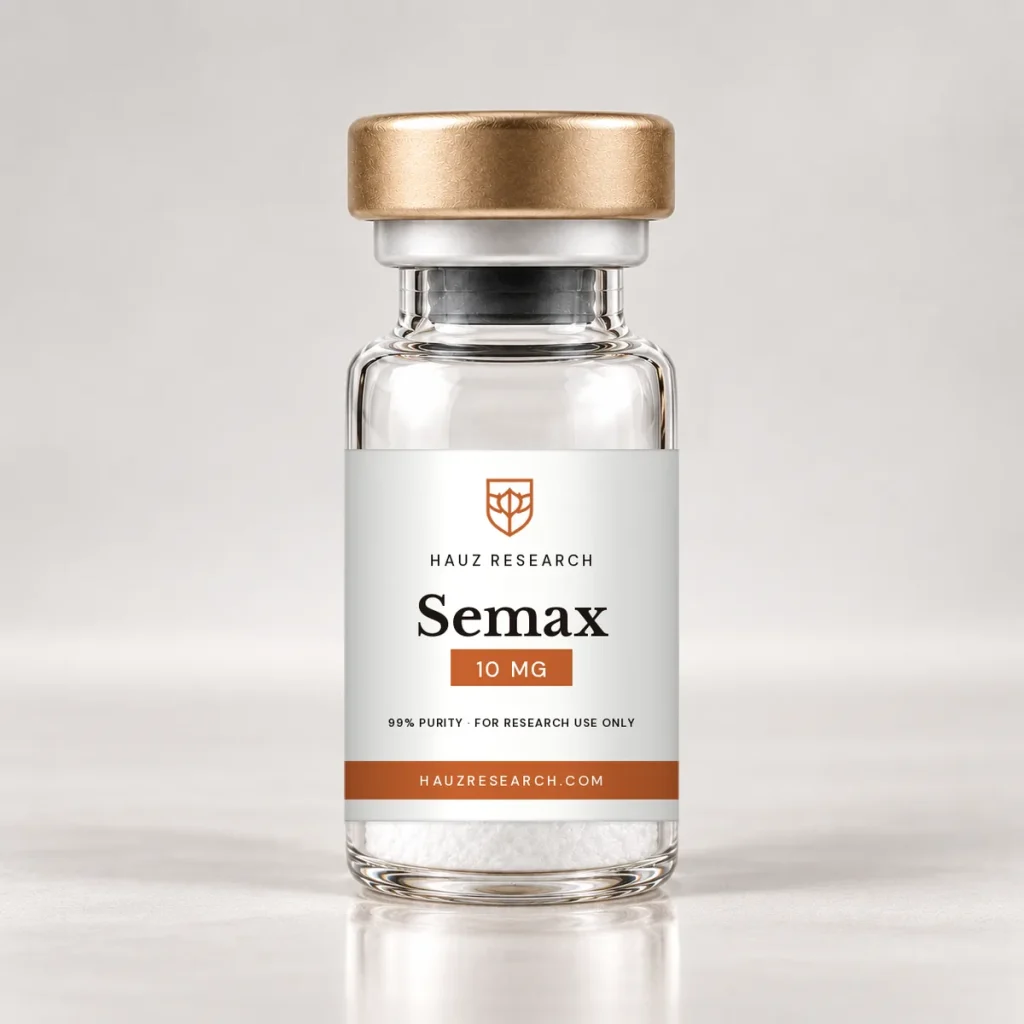
Semax peptide is a synthetic heptapeptide, offered by HAUZ Research as a research compound in a 10 mg vial for laboratory use. Its seven-amino-acid sequence is Met-Glu-His-Phe-Pro-Gly-Pro (MEHFPGP). The first four residues, Met-Glu-His-Phe, match positions 4 to 7 of adrenocorticotropic hormone (ACTH), and the Pro-Gly-Pro tripeptide added at the end was designed to make the molecule more resistant to breakdown by enzymes. For this reason, Semax is described in the literature as an analogue of the ACTH(4-10) fragment.
Semax has the CAS number 80714-61-0, the molecular formula C37H51N9O10S, and a molecular weight of 813.95 g/mol. More background is available in our Semax research guide.
Origins and structure
Semax was developed by researchers in Russia, with much of the published work coming from groups at the Institute of Molecular Genetics of the Russian Academy of Sciences. One of the earliest indexed reports, Potaman et al., 1991, compared how enzymes in rat blood break down ACTH(4-10) and Semax, which relates directly to the purpose of the C-terminal Pro-Gly-Pro extension.
Areas of laboratory research
- Cell-culture studies: Shadrina et al., 2001 examined cultured glial cells from newborn rat brain and measured messenger RNA levels for nerve growth factor (NGF) and brain-derived neurotrophic factor (BDNF) after exposure to Semax.
- Rat hippocampus studies: Dolotov et al., 2006 measured BDNF protein, BDNF messenger RNA, and activation of its receptor, trkB, in the hippocampus of rats given Semax.
- Rat models of cerebral ischemia: Dmitrieva et al., 2010 studied gene expression in the brains of rats after experimental blockage of the middle cerebral artery, comparing Semax with its Pro-Gly-Pro fragment and measuring transcription of neurotrophin and neurotrophin-receptor genes at several time points.
Quality and verification
Every HAUZ Research lot of Semax is independently tested for HPLC purity (99% or higher), identity by mass spectrometry, and endotoxin. The certificate of analysis for each lot is published in the COA Library, so researchers can match the lot number on their vial to its test results. Semax is supplied as a lyophilized (freeze-dried) powder and is sold strictly for research use only.
Frequently asked questions
What is Semax peptide studied for in research?
Published laboratory studies have examined Semax in rat cell cultures and rat models, mostly measuring the expression of neurotrophin genes and proteins such as BDNF and NGF, and how the peptide is broken down by blood enzymes.
What is the CAS number of Semax?
The CAS number of Semax is 80714-61-0. Its molecular formula is C37H51N9O10S and its molecular weight is 813.95 g/mol.
Is Semax approved for human use?
No. HAUZ Research sells Semax for laboratory research use only. It is not intended for human or veterinary use, is not a food or dietary supplement, and is not an FDA-approved drug in this form.
Published Research Summary
Semax is a synthetic heptapeptide (Met-Glu-His-Phe-Pro-Gly-Pro) described as an analogue of ACTH(4-10). Potaman et al. (1991) compared its breakdown by rat blood enzymes with that of ACTH(4-10) (PMID 1851003). Shadrina et al. (2001) measured NGF and BDNF messenger RNA in cultured rat glial cells (PMID 11457573). Dolotov et al. (2006) measured BDNF and trkB in the rat hippocampus (PMID 16996037). Dmitrieva et al. (2010) studied neurotrophin gene transcription in a rat model of cerebral ischemia (PMID 19633950).
All citations reference published literature. Not a claim of efficacy.
Store lyophilized peptide at -20°C. Protect from light and moisture. Upon reconstitution, store at 4°C and use within 21 days.